Closed smart cabinet solutions are designed for industrial teams that need secure access control, real-time inventory visibility, and traceable material usage in demanding factory environments. For many manufacturers, materials such as tools, spare parts, MRO items, electronic components, precision parts, and high-value consumables cannot be managed with open shelves or uncontrolled storage areas. When these items are taken without clear records, companies may face inventory errors, production delays, unclear responsibility, and unnecessary procurement costs.
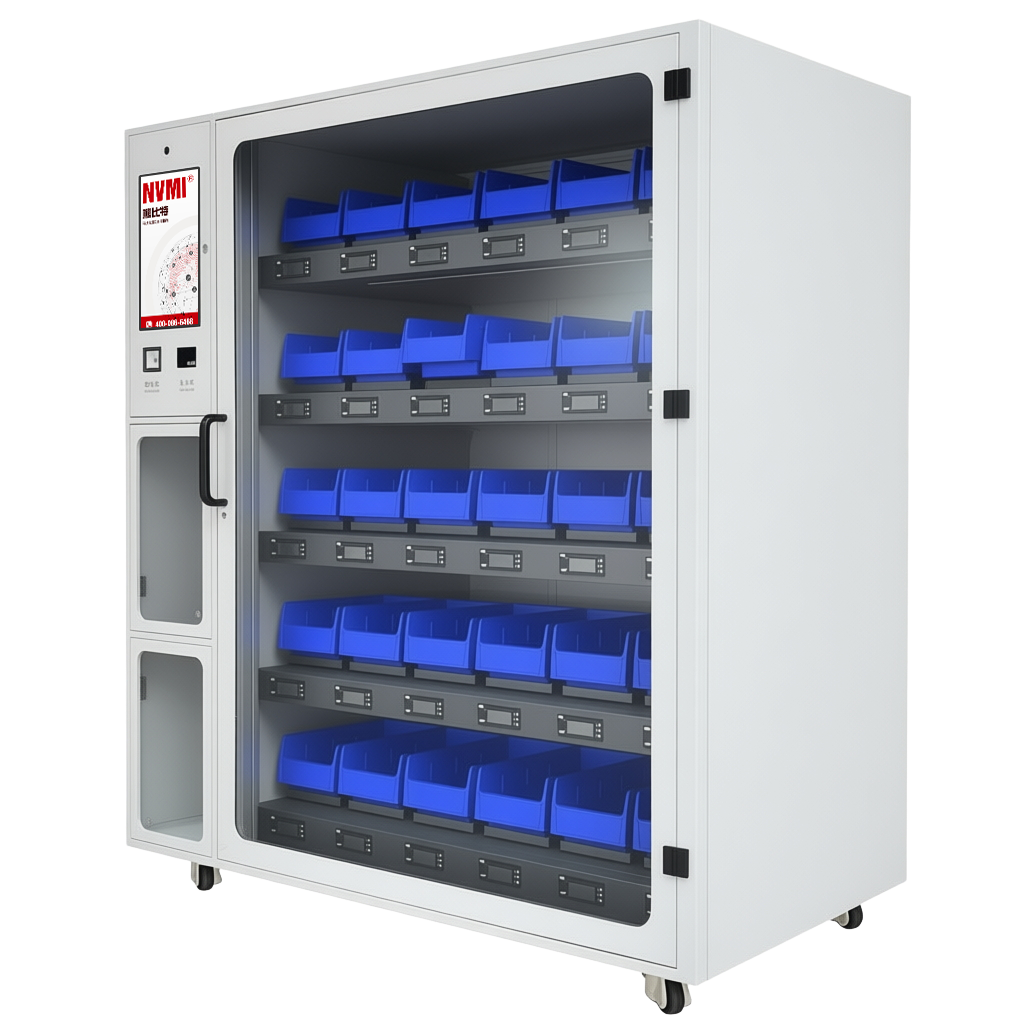
Who Should Use a Closed Smart Cabinet?
A closed smart cabinet is especially valuable for users who need stronger control over who can access materials, when materials are taken, and how inventory changes after each transaction. Unlike open storage systems, a closed cabinet provides a physical barrier and digital permission control. This makes it suitable for factories, warehouses, maintenance rooms, production sites, and industrial service points where material security and usage traceability are important.
The main users include warehouse managers, maintenance supervisors, production line leaders, procurement teams, tool room managers, quality control departments, and factory operations managers. These users often need to balance two goals: employees must be able to access approved items efficiently, while managers must prevent uncontrolled pickup, stock loss, and inaccurate inventory records.
Closed Smart Cabinet for Warehouse Managers
Warehouse managers are one of the most important user groups for a closed smart cabinet. In traditional warehouses, small materials and spare parts are often managed through manual registration, paper forms, or delayed system input. These methods can create differences between physical stock and system stock. Once the records are wrong, warehouse teams must spend more time checking shelves, correcting data, and responding to urgent material requests.
A closed smart cabinet helps warehouse managers create a more standardized issue and return process. Authorized users can access approved materials, while the system records the transaction and updates inventory data. This supports more accurate stock control and reduces the need for frequent manual counting. For warehouse teams handling many types of industrial consumables, the cabinet can also improve location management and make daily operations more organized.
Secure Access Control for Maintenance Teams
Maintenance departments often manage spare parts, tools, safety items, and repair materials that must be available outside normal office hours. If these items are locked in a traditional storeroom, technicians may need to wait for manual support. If they are placed on open shelves, there may be no reliable record of who took them or why they were used.
A closed smart cabinet gives maintenance users a practical balance between security and convenience. Authorized employees can pick up approved materials when needed, including during night shifts, emergency repairs, or weekend maintenance work. At the same time, managers gain digital records that support accountability and follow-up analysis. This is especially useful for factories that operate continuously and cannot depend only on manual warehouse service.
Supporting Production Line Supervisors
Production line supervisors need stable material availability to keep operations moving. Missing tools, incorrect parts, or uncontrolled material usage can affect work efficiency and product consistency. A closed smart cabinet can be placed near production areas to provide controlled access to selected items while keeping management visibility in the background.
For production users, the benefit is not only security. The cabinet also helps reduce time spent searching for materials, asking for manual approval, or checking whether stock is available. Digital inventory tracking allows supervisors to understand consumption patterns and identify items that require replenishment. This supports smoother production planning and helps reduce interruptions caused by material shortages.
Better Inventory Data for Procurement Users
Procurement managers need accurate usage data before making purchasing decisions. If material consumption is not recorded correctly, purchasing decisions may depend on estimates rather than actual demand. This can lead to overstock, emergency orders, or repeated shortages of critical items.
By using a closed smart cabinet, procurement users can rely on more accurate consumption records and stock status information. Shortage reminders and real-time inventory updates help teams plan replenishment based on actual usage trends. This is particularly useful for MRO materials, spare parts, controlled tools, and other industrial items that are important to operations but difficult to forecast with traditional methods.
Traceable Material Usage for Quality and Compliance Teams
Quality control and compliance teams often need clear records when materials are used in production, maintenance, inspection, or repair processes. In industries such as electronics manufacturing, automotive production, power equipment, robotics, and precision assembly, material traceability can support internal audits and process improvement.
A closed smart cabinet records access behavior and material movement through a digital workflow. Managers can review usage history, identify abnormal consumption, and confirm whether materials were taken by authorized users. This makes the cabinet useful for controlled environments where responsibility tracking and operational discipline are important.
Why Factory Operations Managers Choose Closed Smart Cabinets
Factory operations managers need solutions that improve efficiency without adding unnecessary complexity. A closed smart cabinet supports this goal by combining physical storage, digital access control, inventory monitoring, and replenishment support in one system. Instead of relying only on manual supervision, companies can use connected cabinet data to manage materials more objectively.
This is also where NVMI smart cabinet technology fits into modern industrial material management. By connecting cabinet hardware with digital inventory software, users can monitor stock status, record pickup activity, support permission control, and improve replenishment workflows. The result is a more transparent material management process that helps both frontline employees and management teams.
Best Application Scenarios for Target Users
A closed smart cabinet is suitable for high-security storage rooms, maintenance workshops, production line material stations, tool rooms, spare parts warehouses, and customer-side inventory service points. It is especially useful when materials are valuable, sensitive, frequently used, or difficult to manage with open access.
For example, a maintenance supervisor may use the cabinet to control spare parts for repair work. A warehouse manager may use it to manage MRO consumables and reduce inventory discrepancies. A production manager may place it near a workstation to make approved items available while maintaining traceability. An industrial distributor may use it as part of a vendor-managed inventory program to provide customers with smarter replenishment and better stock visibility.
Choosing the Right Closed Smart Cabinet
When selecting a closed smart cabinet, users should consider the type of materials being stored, access frequency, security requirements, user authorization methods, replenishment responsibility, and integration needs. A cabinet should be easy for authorized employees to use, but strong enough to prevent uncontrolled access. It should also provide useful data for managers, not just physical storage space.
The best closed smart cabinet is one that supports daily operations while helping managers make better decisions. For target users in manufacturing, maintenance, procurement, warehousing, and industrial distribution, it offers a practical path toward secure material control, real-time inventory tracking, and smarter digital warehouse management.