Fastener inventory chaos is a common problem in manufacturing plants, maintenance storerooms, and production-side warehouses. When screws, bolts, nuts, washers, and other small parts are stored in a traditional manual way, companies often face stock discrepancies, misplaced items, overstock, urgent shortages, and poor visibility. These issues not only increase inventory costs but also interrupt production and reduce operational efficiency. A practical way to solve this challenge is to move from manual control to a digital, traceable, and automated inventory model built around a smart cabinet system.
Why Fastener Inventory Becomes Chaotic
Fasteners are high-frequency, low-unit-value items, but they are essential to production continuity. Because they come in many specifications and are often consumed in small quantities across multiple workstations, they are difficult to manage with spreadsheets, open shelves, or handwritten records. In many factories, employees take materials directly from storage without a formal process, and stock updates are delayed or not recorded at all. Over time, this creates a gap between physical inventory and system data.
Another issue is that traditional storage methods do not provide real-time visibility. Managers often discover shortages only when production is already affected. At the same time, to avoid stockouts, some companies purchase too much safety stock, which ties up capital and warehouse space. This is why chaotic fastener inventory management is not only a warehouse problem, but also a production, procurement, and supply chain problem.
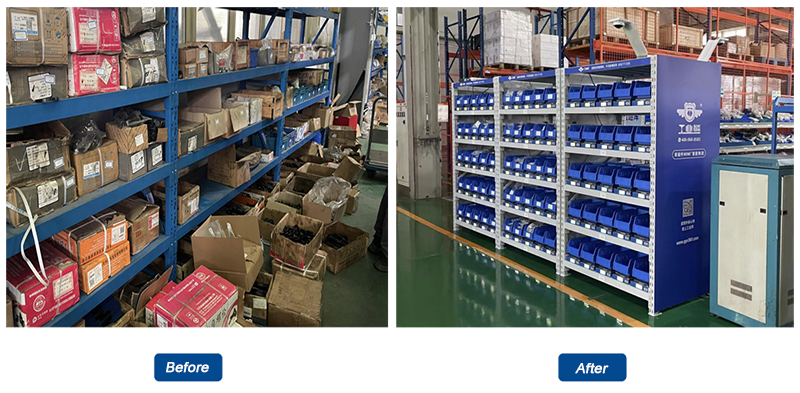
Common Signs of Fastener Inventory Disorder
There are several warning signs that indicate a company needs to improve its fastener inventory process. The first is frequent stock discrepancies between recorded quantities and actual quantities. The second is repeated urgent purchasing because commonly used items suddenly run out. The third is excessive inventory of slow-moving items. Other common problems include mixed storage locations, unclear responsibility for material usage, and long picking times for operators.
When these issues occur together, the root cause is usually a lack of standardization, traceability, and data-driven replenishment. Solving the problem requires more than better shelving. It requires a smarter inventory management method.
How a Fastener Smart Cabinet Solves the Problem
A NVMI fastener smart cabinet helps manufacturers turn fastener storage into a controlled and digital process. Instead of relying on open access and manual records, the system manages who takes materials, when they are taken, what item is taken, and how much is consumed. This creates accountability and gives managers real-time inventory visibility.
With a smart cabinet, fasteners can be stored by specification, usage frequency, or production line requirement. Each compartment or unit is associated with product data, and the cabinet system can record every withdrawal and replenishment action automatically. This reduces human error and prevents uncontrolled material flow. It also makes daily management much simpler for warehouse teams and production supervisors.
Another major advantage is real-time inventory tracking. Instead of waiting for manual stock checks, the system continuously updates stock levels. This allows managers to identify abnormal usage patterns, prevent stockouts earlier, and improve replenishment planning. For fasteners, where volume is high and transactions are frequent, this level of visibility is especially valuable.
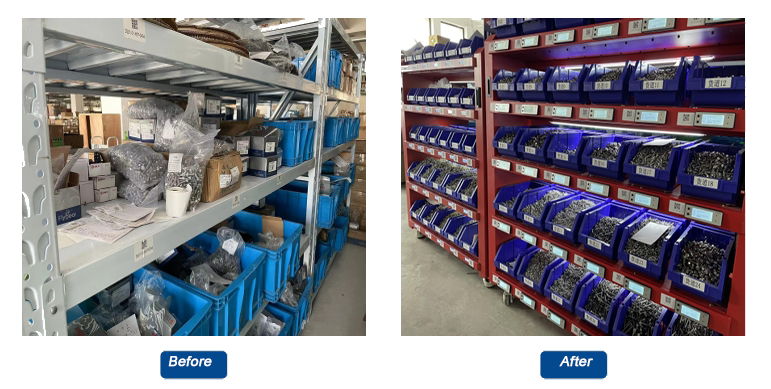
Improve Traceability and Access Control
One of the biggest reasons fastener inventory becomes chaotic is unrestricted access. When too many people can take materials freely, no one has clear responsibility. A smart cabinet introduces access control through user permissions, which means only authorized personnel can retrieve specific items. This is useful for both routine production materials and controlled industrial consumables.
Traceability also improves significantly. Every transaction can be linked to a person, time, and item. This makes it easier to investigate unusual consumption, reduce waste, and establish a more disciplined material issue process. For factories that want stronger internal control, this is an important step toward digital inventory governance.
Enable Automatic Replenishment for Fastener Inventory
Fastener shortages often happen because replenishment depends on manual observation. In a busy factory, this approach is unreliable. A digital fastener inventory management system can set minimum stock thresholds and trigger alerts when inventory falls below the safety level. This helps procurement teams and suppliers respond before production is affected.
Automatic replenishment logic also improves purchasing accuracy. Instead of ordering based on guesswork, companies can use actual consumption data to make replenishment decisions. This reduces both emergency purchasing and unnecessary stock accumulation. Over time, the result is a more balanced inventory structure with better stock turnover.
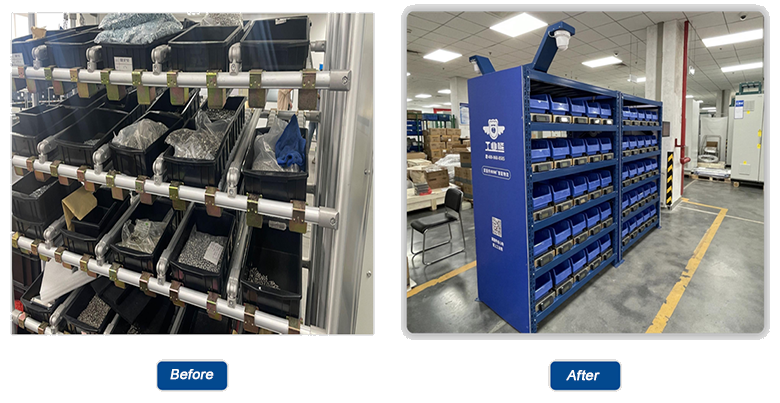
Reduce Labor and Increase Picking Efficiency
Chaotic inventory does not only affect stock accuracy. It also wastes labor. Workers spend time searching for the right fasteners, confirming specifications, asking for approvals, or waiting for warehouse personnel to issue items. In production environments with frequent line-side demand, these delays add up quickly.
A smart cabinet improves efficiency by organizing fasteners clearly and making them easier to locate and issue. Employees can complete authorized self-service pickup more quickly, while managers gain clear usage records without extra paperwork. This supports 24/7 operations, multi-shift production, and fast response to changing material demand on the shop floor.
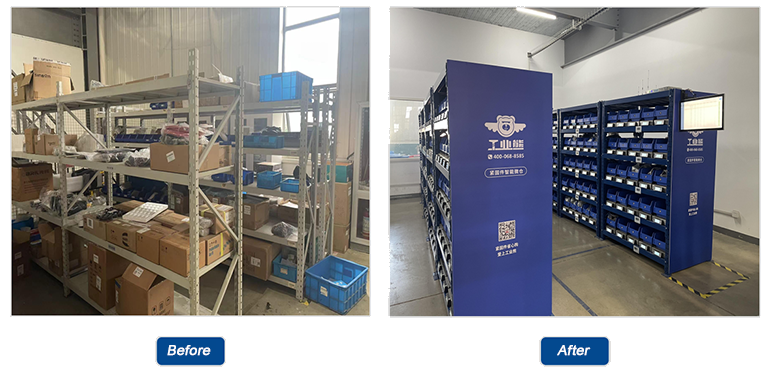
Best Practices for Fixing Fastener Inventory Chaos
To solve fastener inventory problems effectively, companies should first review which fasteners are high-frequency, critical, or difficult to control. These items should be prioritized for digital management. The next step is to standardize storage locations, item coding, and user permissions. After that, the business can connect inventory monitoring with replenishment rules and reporting processes.
It is also important to involve multiple departments. Warehouse managers, procurement teams, production planners, and maintenance staff all influence fastener usage. A successful solution should support cross-department visibility rather than operate as an isolated storage tool. The goal is not simply to store fasteners better, but to create a more responsive and transparent material flow process.
Conclusion
Chaotic fastener inventory management can lead to shortages, overstock, wasted labor, and production disruption. Traditional manual methods are no longer sufficient for factories that need better control, traceability, and efficiency. A fastener smart cabinet provides a practical solution by combining access control, real-time stock visibility, traceable material transactions, and automatic replenishment support.
For manufacturers looking to improve industrial inventory control, reduce stock disorder, and support smarter warehouse operations, digital fastener management is a strong step forward. By replacing manual processes with a structured and intelligent system, companies can turn fastener inventory from a recurring problem into a manageable and measurable part of operations.