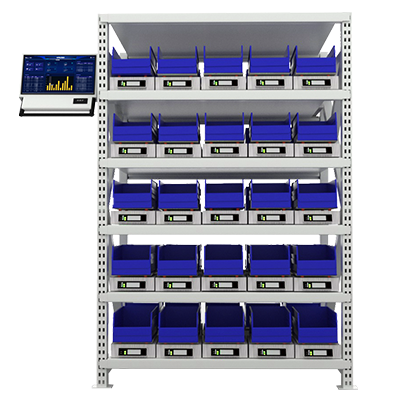
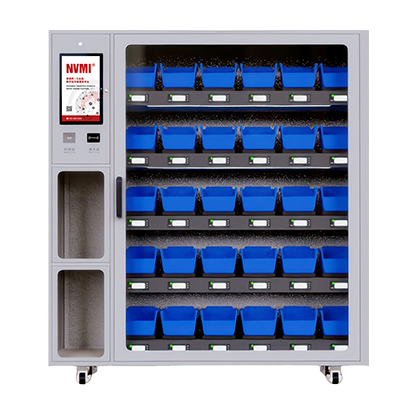
NVMI smart cabinet is becoming a practical solution for manufacturers that need tighter control over MRO supplies, fasteners, tools, spare parts, and other high-frequency production materials. In many factories, traditional shelves and manual storerooms still create problems such as unclear stock levels, delayed replenishment, misplaced items, and limited accountability. A digital cabinet system changes that by turning everyday material flow into a visible, traceable, and manageable process.
Why Manufacturers Are Moving Toward Digital Material Control
Industrial operations depend on thousands of small but critical items. When these materials are not available at the right time, production delays, maintenance interruptions, and urgent purchases quickly follow. At the same time, many businesses carry excess stock because they do not trust the accuracy of their current inventory records. This creates a costly cycle of overbuying, stock discrepancies, and inefficient labor.
An NVMI smart cabinet helps solve these issues by combining physical storage with digital inventory intelligence. Instead of relying on handwritten records or delayed system updates, enterprises can manage issue, return, and replenishment activities through a connected system that supports real-time inventory tracking, access control, and traceable material movement. This is especially valuable in manufacturing plants where inventory accuracy directly affects uptime, labor efficiency, and purchasing decisions.
How an NVMI Smart Cabinet Improves Daily Operations
The core value of an NVMI smart cabinet is that it brings order and visibility to materials that are often difficult to control. High-turn items such as fasteners, MRO parts, consumables, electrical components, and maintenance supplies can be stored in a structured system that records who accessed the material, when it was taken, and how much was used. This creates a much stronger management foundation than open racks or conventional cabinets.
For factory managers, this means fewer manual checks and less time spent resolving stock disputes. For procurement teams, it means better consumption data and more reliable replenishment planning. For warehouse and production leaders, it means faster access to required materials without sacrificing control.
The system is also well suited to 24/7 environments. In many plants, material demand does not stop when office staff leave. A smart cabinet supports controlled self-service access so authorized employees can collect required items during different shifts while every transaction remains digitally recorded. This helps reduce dependence on manual storeroom supervision and improves responsiveness on the shop floor.
Real-Time Inventory Tracking Creates Better Decisions
One of the biggest advantages of a digital cabinet solution is real-time inventory tracking. When stock data is updated automatically, managers no longer need to rely on delayed entries or periodic manual counts to understand what is happening. They can see actual inventory conditions, identify abnormal usage patterns, and react faster to shortages before they affect production.
This level of visibility supports better planning across departments. Procurement teams can replenish based on true consumption trends. Supply chain managers can reduce emergency orders. Production planners can improve confidence in material availability. Maintenance teams can access critical spare parts without creating hidden stock losses.
For companies working toward lean manufacturing and digital transformation, this visibility is not just a convenience. It becomes a foundation for smarter material flow management and stronger operational discipline.
Controlled Dispensing and Traceability for High-Value Materials
Not all industrial materials should be managed in the same way. Some items are low cost but high volume, while others are sensitive, expensive, or linked to strict internal control requirements. An industrial vending system or smart cabinet gives enterprises a more secure method for controlled dispensing, especially in environments where access must be limited to authorized users.
Traceability matters because inventory problems are not always caused by demand fluctuation. They are often caused by unclear responsibility, undocumented withdrawals, and inconsistent return processes. With a traceable digital workflow, businesses can build stronger accountability without creating extra administrative work. This is particularly useful for automotive factories, electronics production, robotics manufacturing, energy equipment, and maintenance storerooms where small components can have a large operational impact.
By replacing uncontrolled issue processes with permission-based access and recorded transactions, enterprises gain a more stable and auditable way to manage industrial inventory control.
Why Smart Replenishment Supports Leaner Inventory
A common challenge in MRO inventory control is balancing service level and stock cost. If safety stock is too low, production risk rises. If it is too high, capital is tied up in slow-moving items. A smart replenishment system helps businesses move away from guesswork by using actual inventory and usage data to support replenishment decisions.
When stock levels fall below defined thresholds, the system can trigger a replenishment reminder so teams can act before a shortage becomes urgent. This supports a more disciplined replenishment process and reduces the need for excessive buffer inventory. Over time, it also helps companies improve purchasing accuracy and reduce obsolete stock.
For B2B manufacturers, this matters because inventory reduction should never come at the expense of production continuity. The goal is not simply to store less. The goal is to store smarter, respond faster, and keep materials available where and when they are needed.
Best-Fit Application Scenarios for Intelligent Material Management
Intelligent material management is especially effective in production environments where material usage is frequent, decentralized, and difficult to monitor manually. This includes assembly lines, maintenance areas, tool cribs, warehouse issue points, and transit storage locations. It also works well for businesses that want to standardize material pickup across multiple departments or shifts.
Typical applications include fastener inventory control, spare parts access, production consumable management, and secure storage for controlled materials. In these scenarios, the combination of digital access, usage records, and real-time visibility can significantly improve process consistency.
For enterprises looking to modernize their internal supply process, NVMI provides a solution-oriented path that connects storage, dispensing, and replenishment into one practical management model.
From Storage Equipment to Digital Supply Chain Visibility
An NVMI smart cabinet should not be seen as only a storage device. Its real value comes from how it supports broader digital supply chain visibility. When item movement is captured accurately at the point of use, decision makers gain better data for purchasing, warehouse planning, line-side supply, and inventory optimization.
This makes the solution relevant not only to warehouse teams but also to procurement leaders, plant managers, and supply chain managers who need measurable control over material flow. As factories continue to digitalize operations, connected storage and controlled dispensing will play an increasing role in reducing errors, lowering labor dependency, and improving inventory accuracy.
For industrial companies that want practical, scalable improvement, an NVMI smart cabinet offers a clear advantage: it turns everyday material handling into a more transparent, secure, and efficient process.