Smart cabinet solutions are becoming a practical answer for manufacturers that need better control over MRO materials, spare parts, tools, fasteners, and production-line consumables. For end customers, the decision is not only about buying a cabinet. It is about solving daily problems such as missing inventory, uncontrolled material pickup, delayed replenishment, manual counting, and limited visibility across the factory floor.
In industrial environments, material management often affects production continuity, procurement accuracy, warehouse labor, and cost control. A modern smart cabinet connects physical storage with digital inventory data, helping companies know who picked up which material, when it was taken, where it was used, and when replenishment is needed. Solutions from NVMI combine intelligent hardware, sensing technology, smart units, real-time inventory records, shortage reminders, access authorization, and SaaS-based management for digital material control.
Key Questions End Customers Ask Before Choosing a Smart Cabinet
1. What Problems Can a Smart Cabinet Actually Solve?
End customers usually start with a simple concern: will the smart cabinet reduce the problems they already face in the warehouse or on the production line? In many factories, auxiliary materials and spare parts are managed through manual registration, open shelves, paper forms, or delayed ERP input. These methods often create inventory differences, unclear usage records, emergency shortages, and unnecessary overstocking.
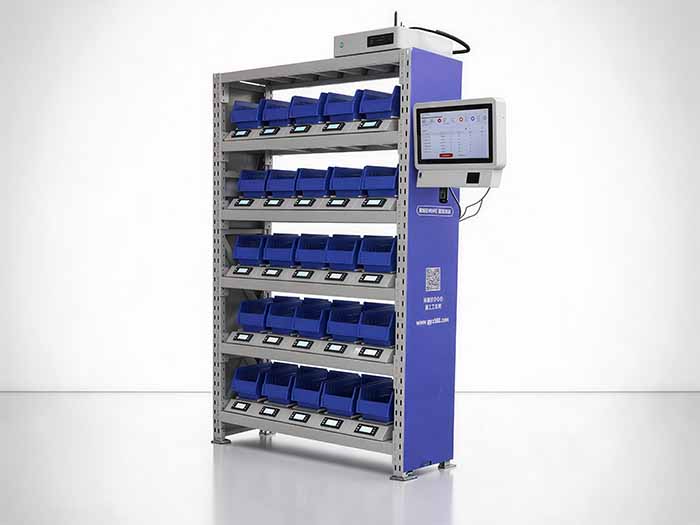
A smart cabinet improves this process by turning material storage, pickup, return, and replenishment into a controlled digital workflow. Instead of relying on workers to write down every transaction manually, the system records usage behavior and updates inventory data automatically. This helps warehouse managers reduce account-to-actual discrepancies, while procurement teams gain more reliable consumption data for planning.
2. How Does a Smart Cabinet Improve Inventory Accuracy?
Inventory accuracy is one of the biggest concerns for end users. When material records are updated late or entered incorrectly, the company may believe stock is available when the shelf is actually empty. This creates urgent purchasing, production delays, and poor supplier coordination.
A smart cabinet supports real-time inventory visibility by connecting cabinet hardware with digital management software. Through sensing, smart units, and data collection, inventory changes can be reflected more quickly than traditional manual processes. Managers can view stock status, material usage records, and replenishment information through the backend system, reducing dependence on repeated manual stocktaking.
This is especially useful for fastener inventory control, MRO spare parts, maintenance consumables, and high-frequency production materials. These items may have low unit value, but poor control can create high hidden costs when workers spend time searching, counting, or waiting for replenishment.
3. Can the Smart Cabinet Control Who Takes Materials?
For many factories, access control is just as important as inventory accuracy. Open shelves are convenient, but they make it difficult to manage responsibility. Materials may be taken without registration, used by the wrong department, or removed in excessive quantities.
A smart cabinet can support authorized access through methods such as ID card, QR code, face recognition, or other permission-based controls depending on the configuration. This allows companies to define who can access specific materials and helps prevent unauthorized pickup. For high-value tools, sensitive components, or restricted consumables, controlled dispensing creates stronger accountability.
The system can also keep access logs, making it easier to trace material movement. For end customers, this answers one of the most important operational questions: can the company clearly know who took what, when, where, and how much?
4. Does a Smart Cabinet Support 24/7 Self-Service Material Pickup?
Manufacturing operations do not always follow warehouse office hours. Night shifts, maintenance tasks, urgent repairs, and continuous production lines may require materials at any time. If workers must wait for a warehouse operator, productivity can suffer.
A smart cabinet supports self-service pickup based on permissions. Authorized staff can collect needed materials without waiting for manual approval each time. This improves convenience while still keeping transactions traceable. For plants with multiple shifts or decentralized workstations, 24/7 access can help reduce downtime and improve production responsiveness.
5. How Does Smart Replenishment Help Procurement Teams?
Procurement teams care about more than storage. They need accurate demand signals, timely replenishment reminders, and reliable consumption trends. A smart cabinet can generate shortage warnings when stock falls below the safety level set in the system. This helps prevent last-minute purchasing and reduces the risk of production interruptions caused by missing materials.
Compared with traditional safety stock planning, smart replenishment is based on actual usage data. Buyers and suppliers can better understand consumption patterns, avoid excessive emergency orders, and reduce stagnant inventory. For industrial distributors, this also creates an opportunity to provide value-added inventory services instead of only supplying products.
6. Is a Smart Cabinet Suitable for Production Line Material Management?
End customers often ask whether a smart cabinet is only for central warehouses or whether it can also support production-line scenarios. In practice, smart cabinet systems can be used in warehouses, maintenance storerooms, transit areas, and production line material points.
For production lines, the benefit is faster access to frequently used materials near the workstation. Mobile or modular cabinet designs can support changing line layouts, workstation demand, and different storage requirements. This helps reduce walking time, improve material availability, and make the material flow closer to actual production needs.
7. What Should End Customers Evaluate Before Implementation?
Before selecting a smart cabinet, end customers should evaluate material categories, pickup frequency, access control requirements, replenishment logic, available network conditions, system integration needs, and cabinet location. The goal is not to digitize every item at once, but to identify where intelligent material management creates the highest operational value.
For example, high-frequency consumables, costly spare parts, critical maintenance items, and materials with frequent shortages are strong starting points. Companies should also consider whether they need real-time inventory monitoring, smart labels, shortage reminders, return management, user authorization, or backend data export for analysis.
8. Why Smart Cabinet Data Matters for Long-Term Improvement
The long-term value of a smart cabinet comes from data. When material usage becomes visible, managers can analyze consumption by department, employee, workstation, project, or time period. This makes it easier to optimize inventory levels, adjust purchasing plans, identify abnormal usage, and improve material allocation.
Instead of treating warehouse management as a passive storage task, companies can turn it into an active digital supply chain process. With clearer inventory data, smarter replenishment, and controlled dispensing, the smart cabinet becomes part of a broader digital warehouse solution.
Conclusion: A Smart Cabinet Is a Practical Step Toward Digital Material Control
For end customers, the most important question is not whether a smart cabinet looks advanced. The real question is whether it can solve daily material management problems in a measurable and practical way. By improving inventory accuracy, access control, traceability, self-service pickup, and replenishment visibility, a smart cabinet helps factories reduce manual work, lower material management risk, and build a more efficient industrial inventory control process.
As manufacturers move toward smarter warehouses and more connected production systems, smart cabinets offer a practical bridge between physical materials and digital management. For factories, maintenance teams, procurement departments, and supply chain managers, this technology can support better decisions, faster operations, and more reliable material availability.